





Dr Kulshresthas Summerfield Family Practice

Non-urgent advice: Have your say: Public consultation on urgent care services

NHS Birmingham and Solihull Integrated Care Board (ICB) has launched a public consultation on proposed changes to urgent care services across Birmingham and Solihull. The consultation runs from today (5 February) to 16 April 2026.
It focuses on Urgent Treatment Centres (UTCs) and GP services outside normal GP opening hours, and how these services could work better for patients in local neighbourhoods.
 
Patients and the public have told the NHS that when they need urgent but non-life-threatening care, it can be confusing to know where to go or how to access the right service. This can lead some people to attend A&E when their condition could be treated elsewhere, adding pressure to emergency services.
What the consultation is about
The consultation sets out two options for improving neighbourhood urgent care, including UTCs and GP out-of-hours services. Both options aim to:
 
Message for the NHS app
Have your say! The NHS wants to hear from you about proposed changes to community urgent care services in Birmingham and Solihull.
Your experience and views matters. What you tell NHS will help shape how urgent care works in your area. The consultation is now underway and closes on 16 April 2026.
Take part today and find out more via www.birminghamsolihull.icb.nhs.uk/utc-review and complete the online survey at https://www.smartsurvey.co.uk/s/UTCServices/

Non-urgent advice: What would you like help with in the On-line consultation? Information Please click on the link : Use online Patient Triage

Use online Patient Triage

  • use Accurx Monday to Friday from 8am to 6:30pm

Your non-urgent query will be reviewed by a member of our team during working hours (Monday to Friday. 8AM-6.30PM).  We aim to respond on the same working day.  You may receive advice by phone text or directed to another service if appropriate. Any aggressive or rude messages will not be responded to.

Latest News

adnd
adnd
adnd

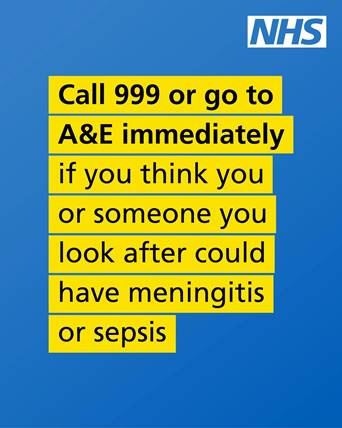
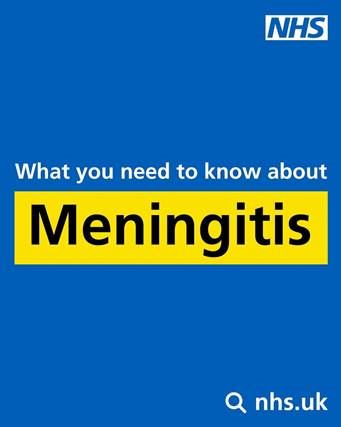
Know the symptoms NHS assets:


A blue and yellow rectangular sign

AI-generated content may be incorrect.A blue and white card with black text

AI-generated content may be incorrect.


A screenshot of a blue screen

AI-generated content may be incorrect.

A blue poster with text and symbols

AI-generated content may be incorrect.

Meningitis. Know the symptoms and what to do if you spot them Title: ⬇️

A blue and yellow sign

AI-generated content may be incorrect.

Meningitis can be very serious if not treated quickly. The NHS website has all the information you need, including what to look out for and when to get medical help. ➡️ https://www.nhs.uk/conditions/meningitis/


What is meningitis and how can you stay protected?

Meningitis is a serious infection that causes swelling around the brain and spinal cord. It can be life-threatening, but many cases can be prevented through vaccination.


What are the symptoms to look out for?

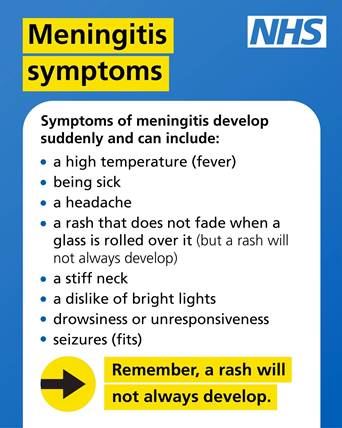
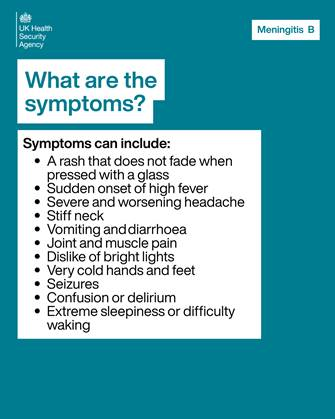
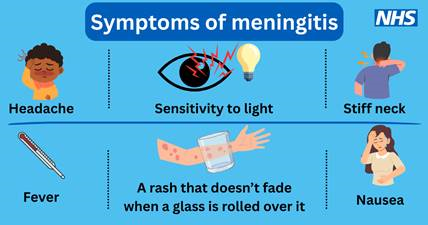
Symptoms can develop quickly and may include:

  • High temperature (fever)
  • Severe headache
  • Stiff neck
  • Sensitivity to light
  • Nausea or vomiting
  • Confusion or difficulty concentrating
  • A rash that does not fade when pressed (in some cases)

If you notice these symptoms, seek medical help urgently.


Who is most at risk?

Meningitis can affect anyone, but babies, young children, teenagers and older adults are at higher risk.

How can you protect yourself and your family?

The best protection against meningitis is vaccination. In the UK, several routine vaccines help protect against different types of meningitis:

  • MenB vaccine – given to babies at 8 weeks, 12 weeks, and 1 year
  • 6-in-1 vaccine – given to babies at 8, 12 and 16 weeks
  • Pneumococcal vaccine – given to babies at 16 weeks and 1 year, and to adults aged 65 and over
  • Hib/MenC vaccine – given to babies at 1 year (for those born on or before 30 June 2024)
  • MMR vaccine – given to babies at 1 year, with a second dose at 18 months
  • MenACWY vaccine – offered to teenagers aged 13 to 14

Making sure you and your children are up to date with these vaccinations is the most effective way to reduce the risk of meningitis.

Page last reviewed: 26 March 2026
Page created: 26 June 2025